Together, our community can keep our treasured public lands and waters… wild for good.


We’re fortunate here in western Colorado to live with an abundance of public lands and waters. These landscapes sustain our way of life – giving us mountains to climb, trails to wander, fishing holes, starry skies and all the joys that come from having the sights and sounds of nature right in our backyard. Our public lands enable our communities to thrive and sustain healthy ecosystems and wildlife. It’s up to us to keep them healthy in return by protecting what we love.
Take Action
Permanent protection for our local public lands is the best way to ensure these places remain Wild for Good.
Read the Report
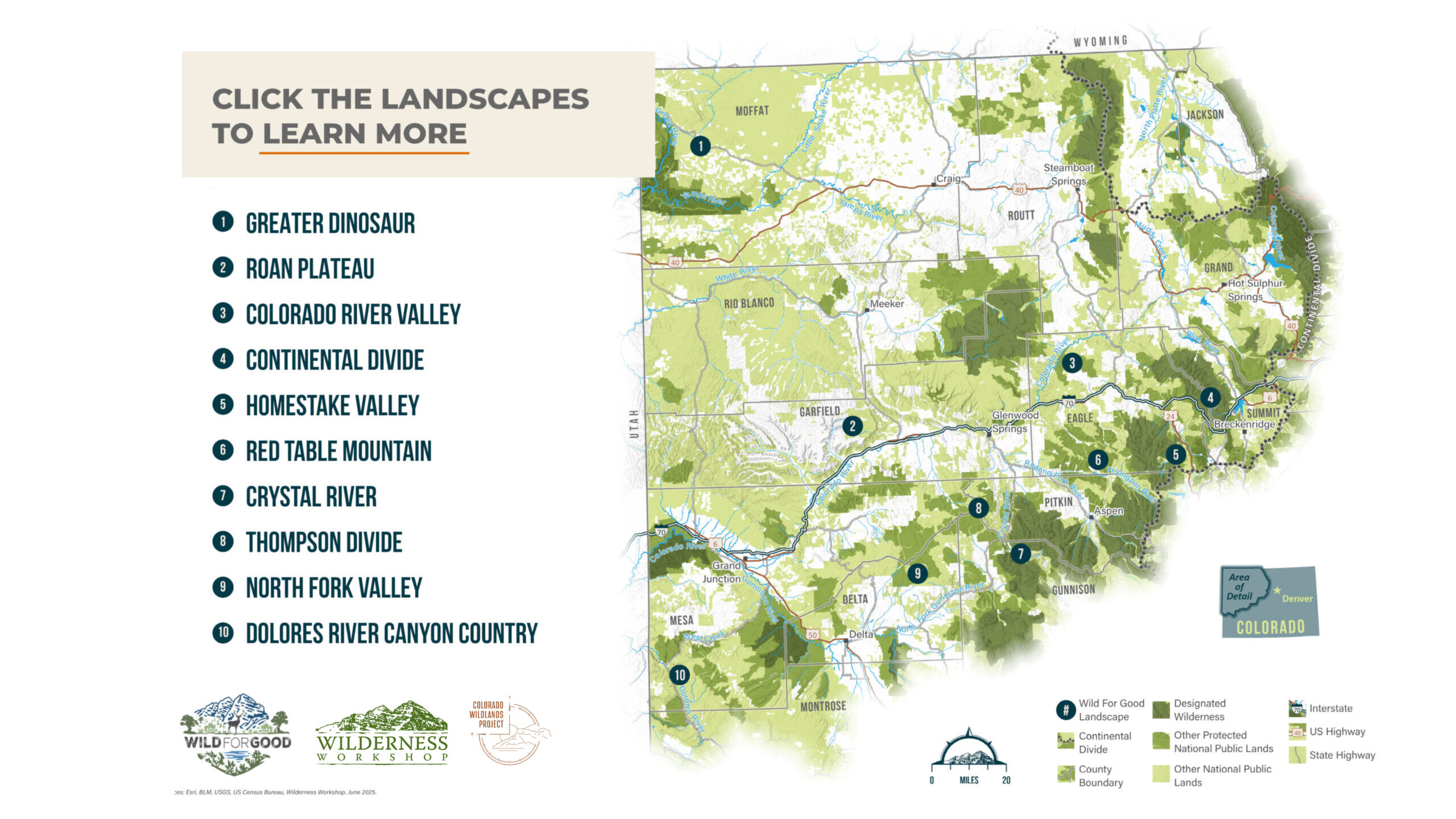
Wild for Good highlights 10 landscapes that Wilderness Workshop is invested in for the long haul.
The Map
Land Acknowledgment
The lands and waters that Wilderness Workshop (WW) seeks to protect are the ancestral homelands of the Nuche (Ute) people. Since time immemorial, Nuche people have been the longest-serving stewards of the landscapes that now make up Western Colorado. In the early 1880s, the US government broke its treaties and agreements with the Nuche, forcibly and violently removing them from their homelands and onto reservations. Euro-Americans colonized the homelands of the Nuche and began to exploit the landscape for short-term gain, leaving scars and a colonial legacy that remains today.
WW recognizes this long and violent history of removal and erasure of Nuche history and culture, which continues to this day. It is important that our modern-day advocacy for conservation and public lands does not perpetuate this cycle and as an organization we have not acknowledged this history with the urgency or attention it deserves. We are taking steps to right this wrong moving forward.

About Wilderness Workshop
Wilderness Workshop defends local public lands from development so wildlife have the freedom to roam, our communities can enjoy the great outdoors, and our small slice of this planet is healthy and resilient for the long term. A core element of that work is securing permanent protections for the wildest and most ecologically rich lands and waters in our region. Permanently protecting public lands takes federal legislation, and these efforts are necessarily built from the ground up, with local communities rallying around a vision for the future of their public lands.